


Search Engine Optimization (SEO) has been the backbone of digital content strategy for years. It’s about crafting content so search engines understand it and rank it in search results pages. But with the rise of generative AI — tools like ChatGPT, Gemini, Google’s AI features, and answer engines — a new discipline has emerged: Artificial Intelligence Optimization (AIO).
Both matter — and using them together multiplies your visibility, engagement, and authority online.
What Is SEO? (Traditional SEO method, but Still Essential)
SEO is the practice of optimizing your website and content so search engines like Google can find, interpret, and rank it for relevant queries. Traditional SEO involves:
- Keyword research (finding terms people search for)
- Backlinks (links from other sites that build authority)
- Technical SEO (site speed, mobile friendliness, structured data)
- Content optimization for relevance and intent
As Entrepreneur explains, SEO is still the foundation of online visibility — helping websites get organic traffic and conversions — and it remains crucial even as AI evolves.SEO drives where and when people find your content. It’s about rank, clicks, and visitor growth. A well-executed SEO strategy helps you appear on the first page, in rich snippets, in maps, and across multiple discovery avenues.
What Is AIO? (Next-Gen Optimization for the AI Era)
Artificial Intelligence Optimization (AIO) is the practice of optimizing your web presence for AI discovery systems — not just search engines. AIO isn’t just about keywords or traditional ranking signals; it’s about how AI systems comprehend, interpret, reference, and answer queries directly.
AIO focuses on several factors SEO doesn’t always emphasize:
- Structured content that AI can parse and use in answers
- Clear context, entities, and topical authority signals
- Consistency of your brand and message across platforms
- Being an authoritative source AI will cite or recommend
- Content designed to be referenced by generative models (not just clicked)
One key difference is that SEO aims to rank you in the search results, whereas AIO aims to make AI systems include you as the answer — even when users don’t click through to your site.In the evolving landscape of AI-powered search and answer engines, visibility isn’t just ranking — it’s being cited in the output itself. This includes platforms like search generative experience tools, voice assistants, and AI summaries.
SEO + AIO: Why You Can’t Ignore Either Today
1. SEO Gets You Discovered — AIO Gets You Recognized
SEO makes your content visible to users and search engines. AIO makes your content extractable and trustworthy to AI systems that synthesize information and answer questions.
SEO builds your baseline traffic; AIO ensures AI tools can include your content in answers, summaries, and recommendations.
Together they maximize reach and impact.
2. Modern Search Is Not Just Search Results Any More
AI-driven platforms increasingly appear before traditional search results, providing concise answers without requiring users to click. If your content isn’t optimized for AI understanding, you miss out on this new channel of visibility.
For example, optimizing your content so that AI systems directly extract answers can help you get featured in AI answer surfaces — even when users don’t visit your blog at all.
This is why Entrepreneur emphasizes mastering AI-powered search structures as a strategic necessity for businesses today.
3. AIO Extends SEO Beyond Traditional Signals
Traditional SEO still relies on ranking signals like backlinks, crawlability, site structure, and keyword relevance. But AIO layers on additional signals:
- Contextual depth and clarity
- Semantic structure (schema, easy extraction)
- Author consistency and brand presence across platforms
- AI-friendly formatting (FAQs, bullet points, named entities)
- Multi-source validation (citations, mentions, authority signals)
These are the factors that make your brand recommendable to AI — not just rankable to humans.
Benefits of Combining SEO + AIO
🚀 1. Higher Organic Traffic + AI Visibility
SEO continues to drive organic traffic through rankings. AIO ensures your content is usable by generative engines — which can increase visibility even without clicks.
This dual strategy captures audiences both searching and asking conversational questions.
📈 2. Stronger Domain Authority Over Time
High-quality SEO content builds backlinks and authority. When AI systems consistently see your domain cited or referenced — whether via your own content or external mentions — your brand’s authoritative signal strengthens.
AIO helps AI systems recognize you as a source, which indirectly boosts visibility in future AI interactions.
🧠 3. Better User Experience and Engagement
AI-optimized content generally:
- Answers user questions immediately
- Is structured clearly
- Uses headings, bullets, schema, and context that users love
- Feels stronger and more trustworthy
This builds both search engine and AI assistant trust.
📊 4. More Sustainable Traffic Over Time
SEO alone is reactive — it responds to keywords and algorithms. AIO makes your content proactive — ready for AI discovery as the ecosystem evolves.Even as AI becomes more widely used for search, your content stays usable and relevant across platforms.
Final Take — My Professional Point of View
As a business owner, you want content that does more than rank well — it must connect, engage, and be picked up by modern interfaces. SEO gives you traffic. AIO gives you visibility.
Together, they future-proof your content strategy:
✔ SEO ensures you get found.
✔ AIO ensures you get chosen, cited, and recognized.
✔ Combined — your content gets maximum exposure across search engines, AI assistants, voice search, and omnichannel platforms.
In the era where AI search, generative summaries, and conversational discovery are increasingly common, the best strategy is not SEO or AIO — it’s both, working together.
Here are some great external references
- 📌 Entrepreneur: “AI Is Revolutionizing SEO. Here’s How Marketers Can Keep Up” — covers SEO’s evolution with AI.
- 📌 Entrepreneur: “How SEO and Content Marketing Can Transform Your Business” — explains why SEO + content go hand-in-hand.
- 📌 Entrepreneur: “Your Guide to Mastering the AI-Powered Search Landscape” — highlights how answer engine optimization complements SEO.
Blog By: Larry Robles, Founder & CEO of 5 Creative Group

1. Customers can do business with you on their own time making it easier for them.
2. They create name recognition each time a user uses your App.
3. They increase customer engagement and loyalty.
4. They reduce overhead costs.
5. They help solve problems for your customers.
6. They help to increase sales and business growth.

There’s a new generation of landing pages that can offer customer data profiling and data capture features, e-Commerce, video and lead generation tactics.
A landing page is a standalone web page, created specifically for the purposes of a marketing campaign. It’s where a visitor “lands” when they have clicked on a Google AdWords ad, social media ad or some other place on the web.
They Can Serve Several Purposes
-Help to drive traffic to specific areas of your website.
-Capture data through surveys and mini forms.
-Get website visitors to convert to the next stage in the sales process.
-They can grow your email or mobile lists with opt-in features.
-Display videos, product or service info or teaser information.
-Can give your customers a single, clear path to your shopping cart.
-They can be tracked and measured.
-Etc.
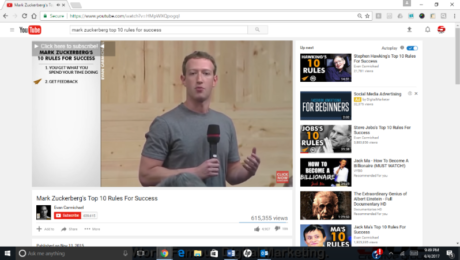
1. You get what you spend your time doing
He was captain of the fencing team. In college, he was known for reciting lines from epic poems such as The Iliad.
2. Get feedback
He began using computers and writing software in middle school.
3. Make mistakes
He enjoyed developing computer programs, especially communication tools and games.
4. Only hire people who you would work for
By the time he began classes at Harvard, he had already achieved a “reputation as a programming prodigy.”
5. Make a change in the world
Zuckerberg launched Facebook from his Harvard dormitory room on February 4, 2004.
6. Learn from the people around you
The group then introduced Facebook onto other campuses nationwide and moved to Palo Alto, California shortly afterwards.
7. Build a really good team
In 2007, at the age of 23, Zuckerberg became a billionaire as a result of Facebook’s success.
8. Give the very best experience
The number of Facebook users worldwide reached a total of one billion in 2012.
9. Care the most about it
Since 2010, Time magazine has named Zuckerberg among the 100 wealthiest and most influential people in the world.
10. Social bonds are critical
Zuckerberg receives a one-dollar salary as CEO of Facebook.